A comprehensive guide to India’s solar manufacturing mandates, supply chain dynamics, and project economics — for developers, EPCs, and industry stakeholders.
What is the ALMM?
The Approved List of Models and Manufacturers (ALMM) is MNRE’s mandatory certification framework ensuring quality and domestic traceability across India’s solar supply chain.
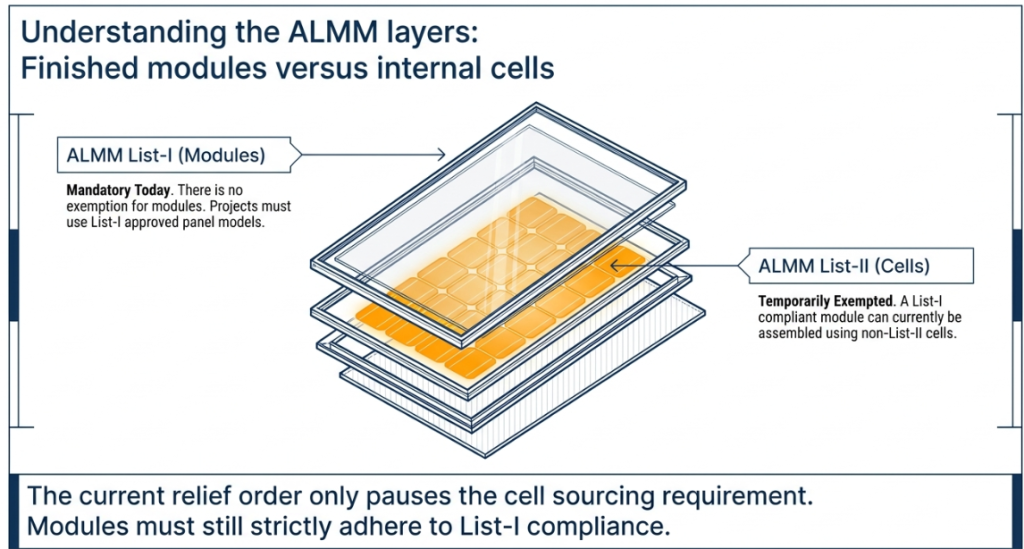
| List-I: Solar PV Modules | List-II: Solar PV Cells |
| Governs complete solar panels assembled and sold in India. Ensures structural quality, module efficiency, and manufacturer accountability. Strategic Focus: Ensure physical panel reliability, weather resilience, and structural warranty compliance. | Governs individual silicon cells inside modules. Mandates that panels use certified domestic cells — not imported ones. Strategic Focus: Accelerate domestic cell manufacturing, reduce reliance on other countries e.g. China, and encourage deep vertical integration. |
Official resources: MNRE ALMM Portal · Government Notices
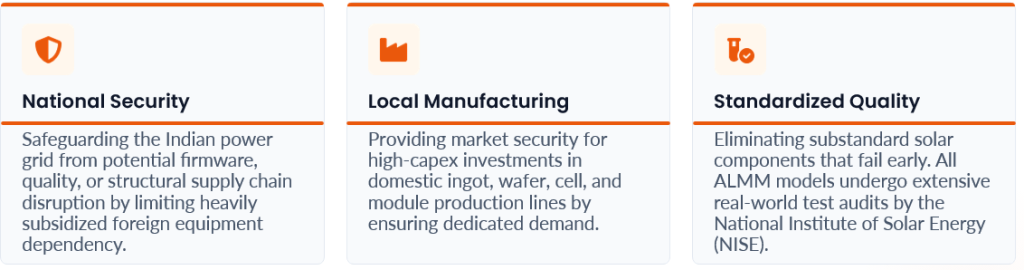
Why Does ALMM Exist?
The July 18, 2026 Government Order
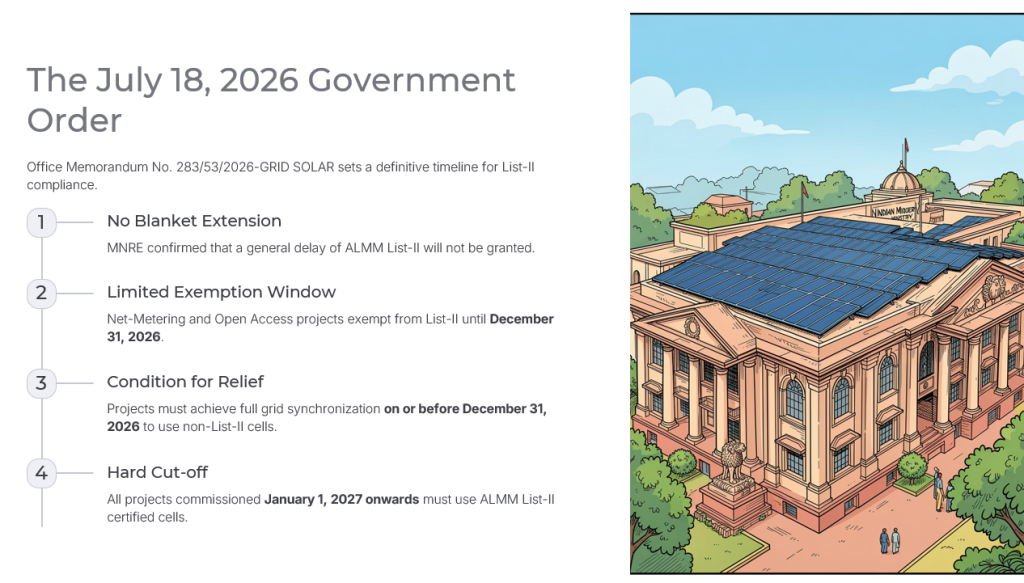
What is the Impact on End users
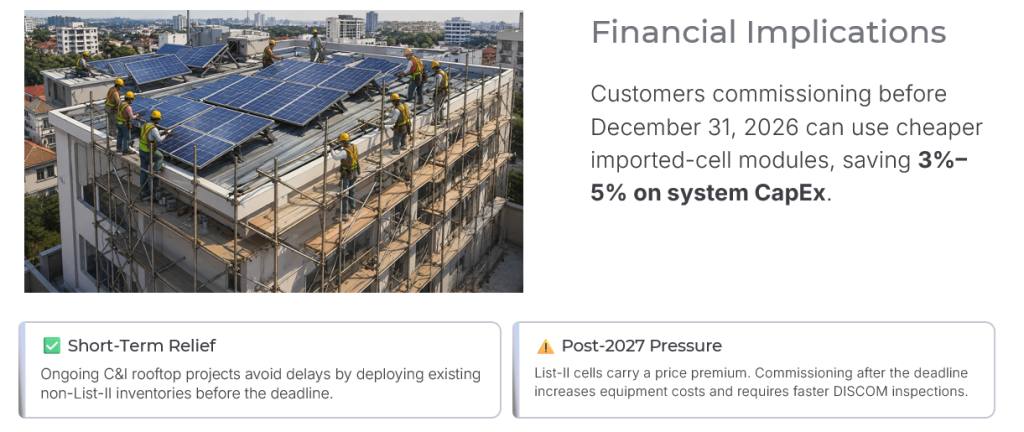
| Solar Project Category | ALMM List-I (Modules) Mandate | ALMM List-II (Cells) Mandate | Funding & Subsidies Eligibility |
| Govt & CPSU Projects (SECI, NTPC, etc.) | Mandatory | Mandatory (Effective June 1, 2026) | Sovereign backing; high-compliance penalties apply. |
| Residential Rooftop (PM Surya Ghar Yojna) | Mandatory | Mandatory (Via domestic cell requirement) | Prerequisite to receive the Central financial subsidy. |
| Net-Metering & Open Access (C&I Consumers) | Mandatory | Exempted till Dec 31, 2026 (Afterward Mandatory) | Allows cheaper cell imports during transition window. |
| Pure Off-Grid / Standalone Private | Optional (but recommended) | Exempt | No government subsidies or grid net-metering allowed. |
Curious to know about Indian make and imported? Read this Post on DCR vs Non-DCR: https://thanniraitechsys.com/dcr-vs-non-dcr/
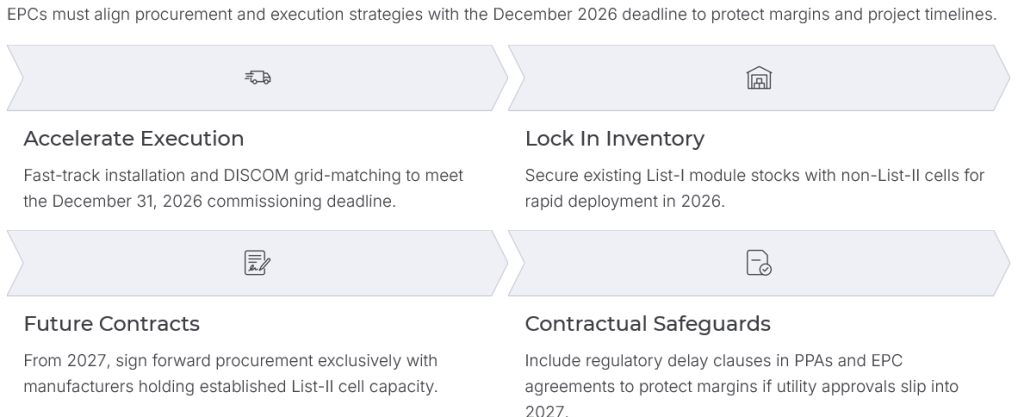
What is the Impact on EPC Contractors
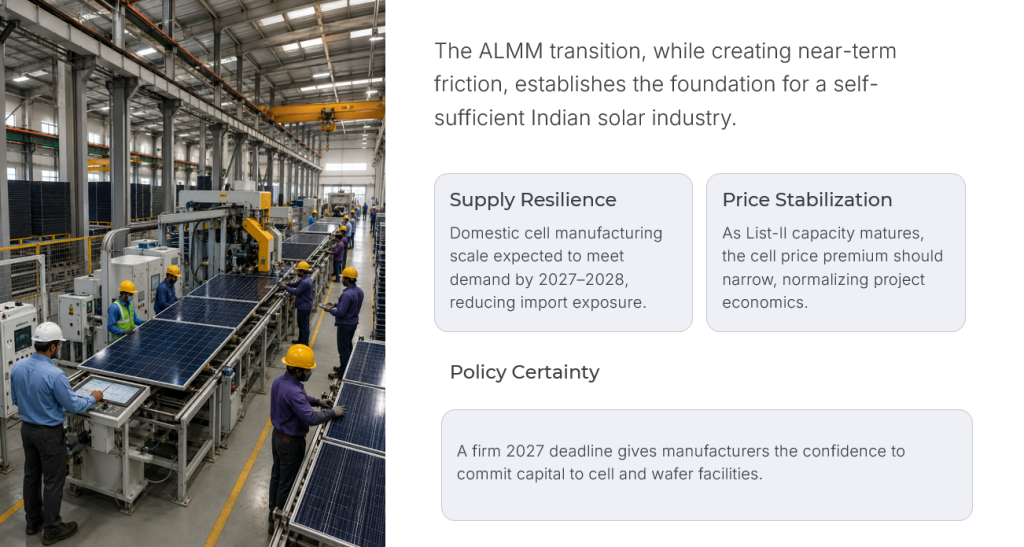
Long-Term Outlook: 2027 and Beyond
The ALMM transition, while creating near-term friction, establishes the foundation for a self-sufficient Indian solar industry.
Key Takeaways & Action Points
| 1: Know Your Compliance Category Confirm whether your project requires List-I only, or both List-I and List-II, based on project type and grid connection. | 2: Commission Before December 31, 2026 Projects eligible for the exemption window must achieve full grid synchronization before the hard cut-off to avoid List-II costs. |
| 3: Secure Supply Chains Now EPCs should lock in module inventories immediately and build List-II supplier relationships for 2027 contracts. | 4: Build Regulatory Clauses Into Contracts Protect project margins by including ALMM-related delay provisions in all PPAs and EPC agreements. |
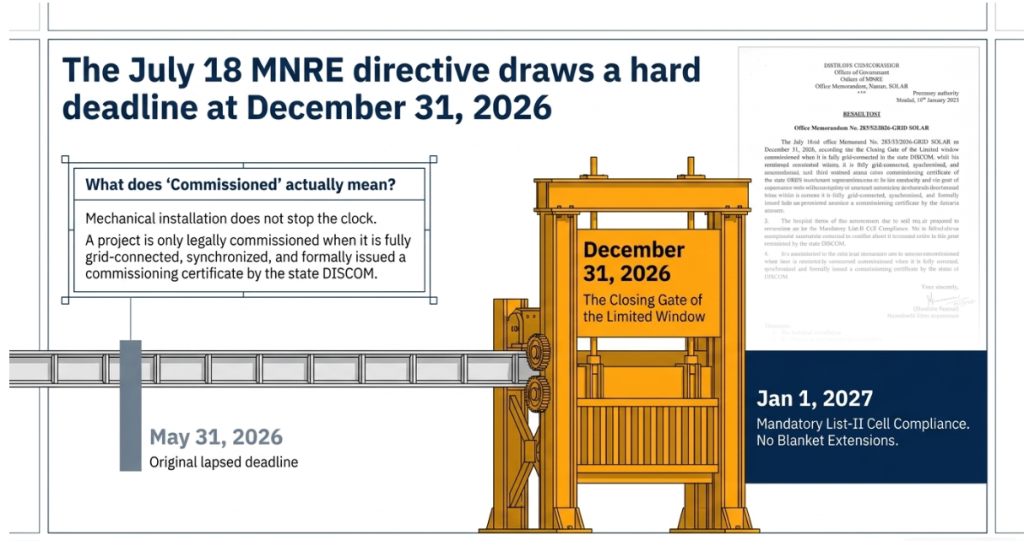
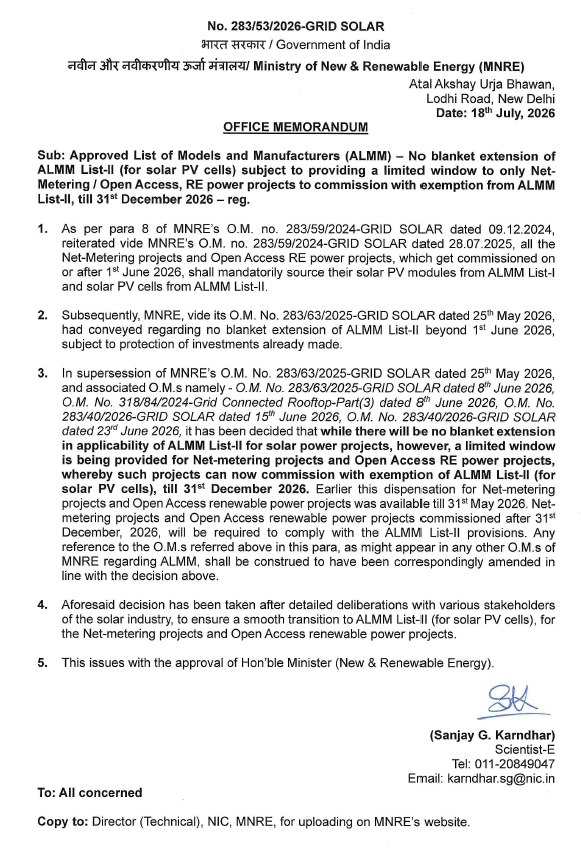
Actual order copy for reference: