
Hold ON ! what is Cross Subsidy Surcharge (CSS)?
Why It Exists:
In India, electricity tariffs are heavily cross-subsidized:
a)High Tension (HT) Commercial & Industrial (C&I) consumers pay a premium tariff (often ₹8.25 to ₹10.00+/unit).
b)This premium subsidizes agricultural consumers (who receive power for free or at very low rates) and low-consumption domestic consumers.
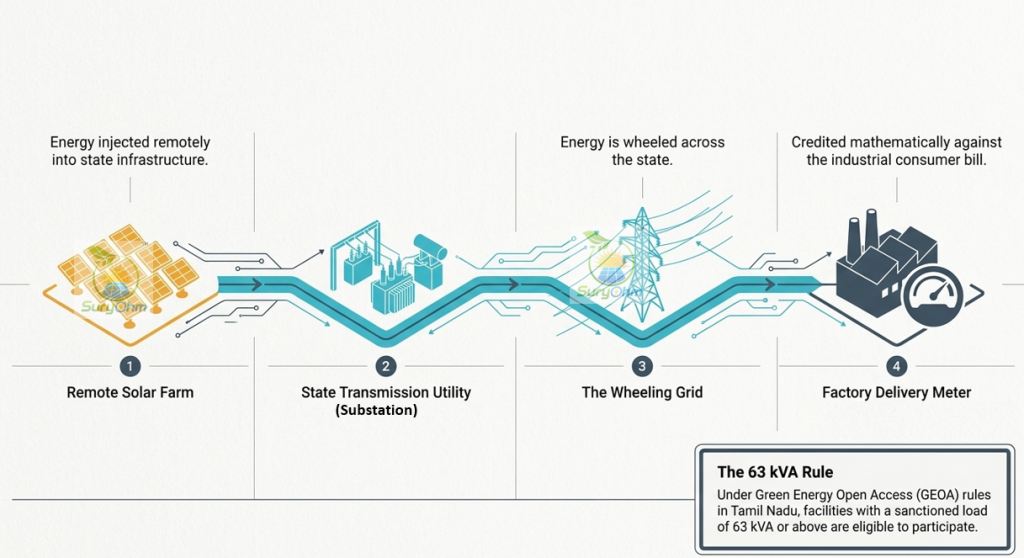
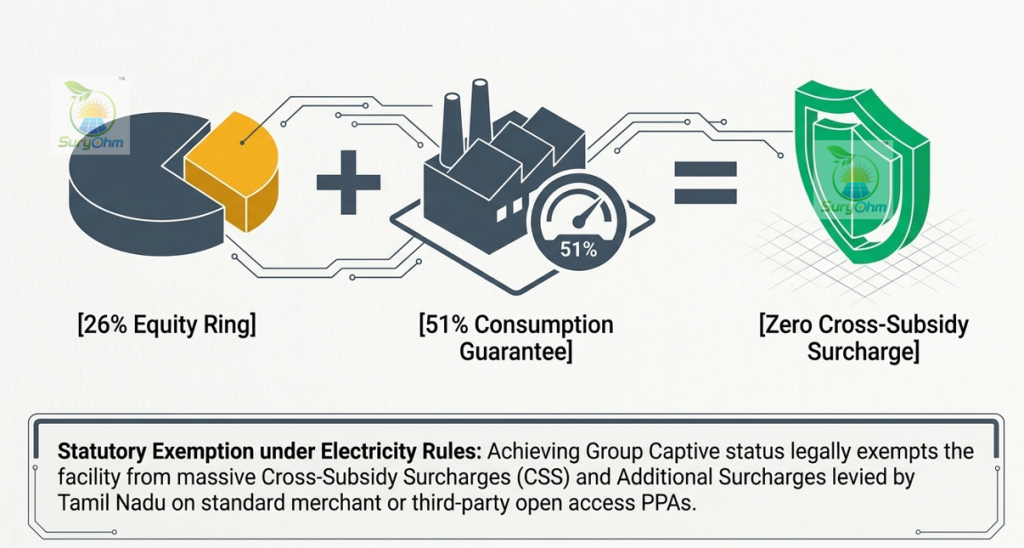
When an industrial or commercial consumer bypasses the local utility (TANGEDCO/TNPDCL) and procures cheaper solar power from an off-site developer via Open Access, the utility loses its high-margin revenue. The Cross Subsidy Surcharge (CSS) is levied to compensate the utility for this loss so that subsidies for rural, domestic, and agricultural consumers do not collapse.
(Note: Under the National Tariff Policy, CSS is capped at 20% of the applicable retail tariff)
Additional Surcharge (AS)
Why It Exists:
Electric utilities enter into long-term Power Purchase Agreements (PPAs) for 20 to 25 years with power plants (thermal, hydro, nuclear) to meet their statutory “Universal Service Obligation”—ensuring power is available whenever consumers switch on machinery.
Under Section 42(4) of the Electricity Act, 2003, if an open-access consumer migrates away from the utility, the power generation capacity that the utility contracted for that consumer becomes stranded. The utility still has to pay fixed capacity charges to those power plants regardless of whether electricity is taken. The Additional Surcharge compensates the distribution licensee for these stranded fixed costs and unrecovered capital investments.
Anti-arbitrage
In the context of power systems, energy storage (BESS), and power distribution (DISCOM / TNERC regulations), energy arbitrage means taking advantage of a price difference between two time periods: Energy arbitrage means charging or purchasing electricity when power is cheap (during off-peak hours) and storing it to discharge or sell back when power is expensive (during peak hours) to profit from the price difference.
Anti-arbitrage refers to the regulatory rules, technical controls, and metering barriers that utilities (like TANGEDCO / TNPDCL) put in place to block, restrict, or penalize consumers and private developers from exploiting these tariff differences.
1. Why Utilities Enforce Anti-Arbitrage
Without anti-arbitrage rules, a commercial consumer with an on-site battery could:
- Charge their battery at night from the grid using off-peak or subsidized slab tariffs (e.g., ₹5.00–₹6.50/unit).
- During daytime or peak hours, export that stored electricity back through the net meter or sell it to the grid, claiming daytime credits or peak buyback rates (e.g., claiming it was clean “solar” energy or displacing ₹9.00–₹10.00/unit peak power).
To the utility, this is a major financial and operational issue:
- Financial leakage: The utility buys back its own electricity at a higher rate.
- Grid stress: Mass charging during sudden night slots can trigger secondary feeder peaks and destabilize local distribution transformers.
- Integrity of Green Credits / Subsidies: Power generated by coal-fired base load at night could be passed off as “green solar energy” to earn green credits or feed-in incentives.
2. How Anti-Arbitrage Is Enforced (Regulations & Technology)
Under TNERC and national BESS/Grid regulations, anti-arbitrage is implemented through three specific mechanisms:
Under TNERC BESS Regulations (Regulation 26.6 – Operational Restrictions & Energy Arbitrage):
A. Strict Statutory Restrictions on Behind-the-Meter (BTM) Batteries
- BTM systems are legally restricted: “The BTM BESS shall primarily be used for meeting captive electricity needs of the consumer and shall not be used for energy arbitrage (i.e., purchase from the grid for storage with the intent of selling back to grid or third parties), unless expressly permitted by the Commission”.
- Grid-tied BTM batteries are prohibited from charging from the grid during designated peak hours.
B. Metering & Accounting Separation
If a system has both Solar and BESS (co-located):
- DISCOMs mandate separate meters for solar generation, BESS charging, BESS discharging, and net grid exchange.
- This multi-metering setup allows the utility to verify that only actual green solar energy is credited for export or net-billing, ensuring grid power routed into the battery cannot be monetized as exported solar energy.
C. Hardware-Level Zero-Export & Reverse Power Relays
For consumers operating captive solar + storage systems without utility export agreements, utilities require:
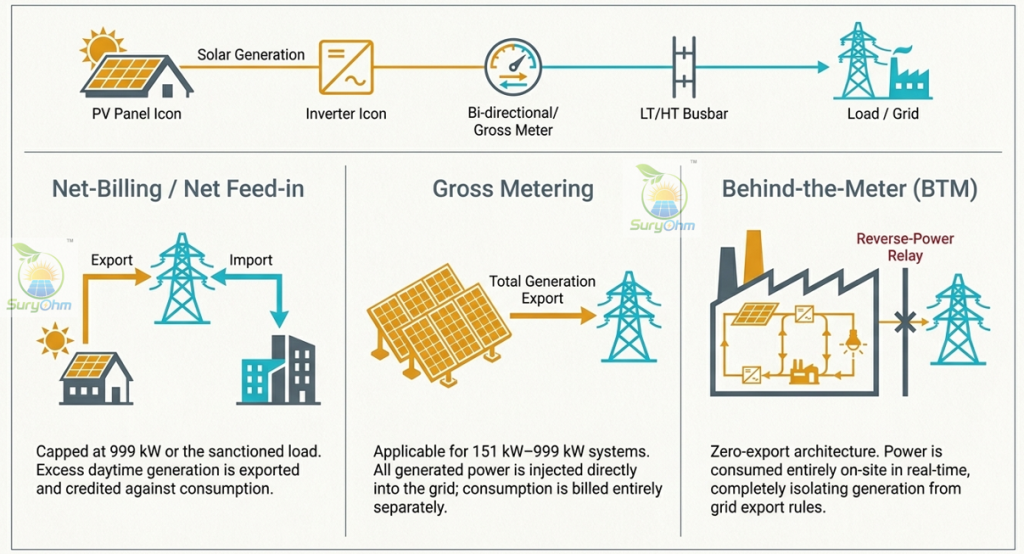
Zero-Export Controllers: Smart inverters that automatically throttle battery discharge so it only feeds internal machinery/appliances and never injects into the utility grid.
Directional Power Relays (Reverse Power Protection – 32 Relay): If power attempts to flow backward from the battery into the grid, the breaker trips instantaneously.
So, what is Peak Shaving?
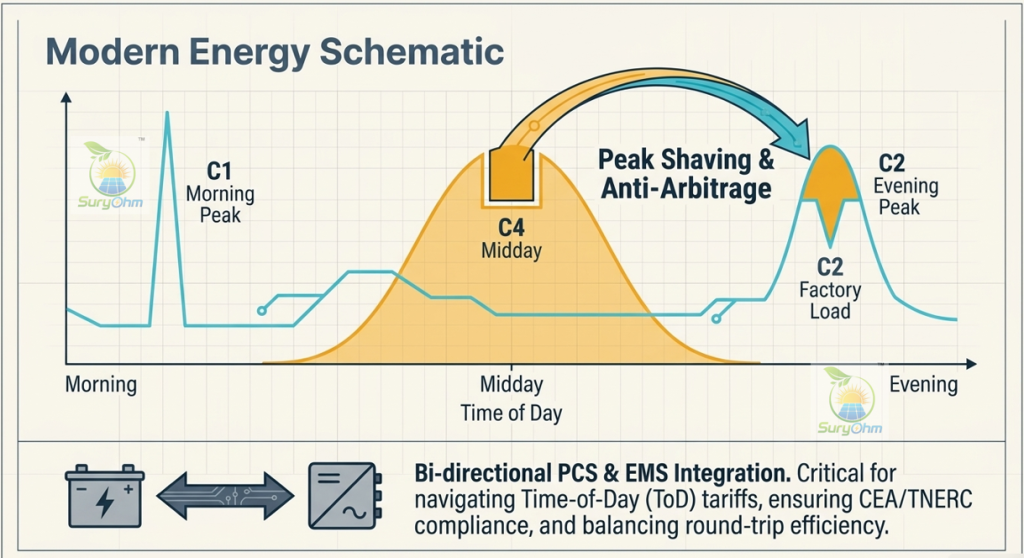
Peak shaving is an energy management strategy used to reduce or “shave off” power consumption during intervals of maximum electrical demand (peak hours).Instead of drawing expensive power from the utility grid during short spikes of high demand, a facility discharges an on-site energy source—such as a Battery Energy Storage System (BESS), captive solar, or backup generator—to supply that peak demand locally.
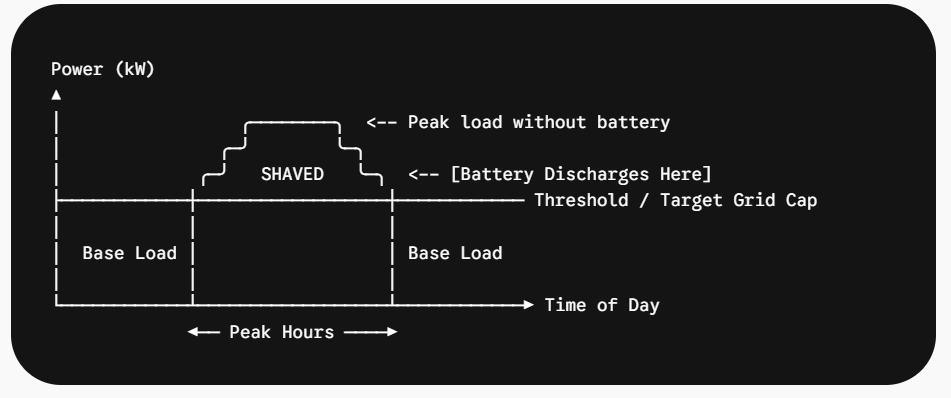
Off-Peak / Normal Hours: The facility runs on regular grid power (and daytime solar). If a battery storage system (BESS) is installed, it charges when grid tariffs are low or when surplus solar generation is available.
Peak Event / Surcharge Window: When facility machines spike demand or when the utility’s official peak-hour window begins, an Energy Management System (EMS) instructs the battery to discharge.
Result: The grid meter never records the spike above the desired threshold, keeping grid power draw flat.
Why Commercial & Industrial (C&I) Facilities Use Peak Shaving
In industrial and commercial operations—especially under TANGEDCO / TNERC regulations in Tamil Nadu—peak shaving delivers two direct financial benefits:
A. Slashing Fixed Demand Charges (Recorded Maximum Demand – RMD)
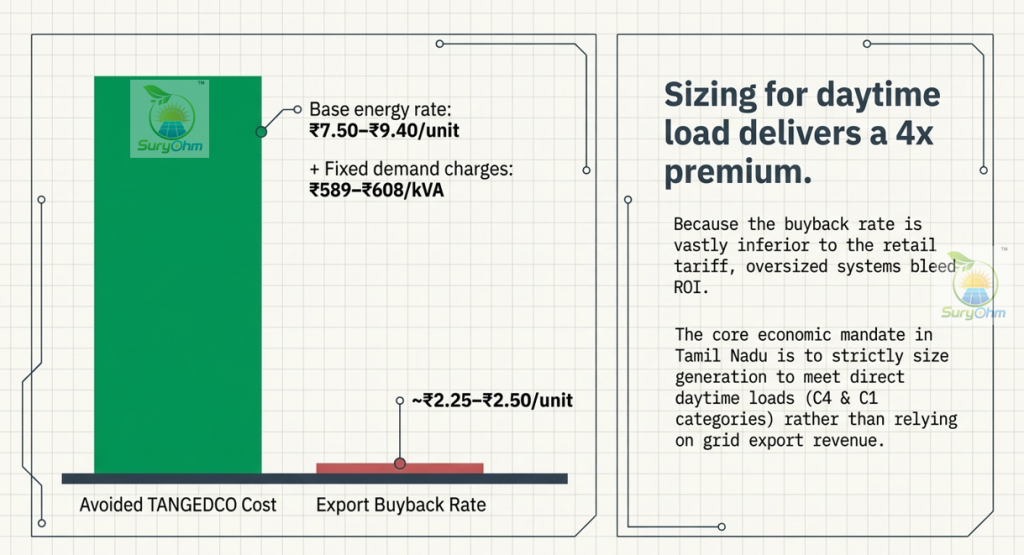
- High Tension (HT) power bills include fixed monthly charges based on Sanctioned Maximum Demand (MD) and Recorded Maximum Demand (RMD) (billed at ₹589 to ₹608 per kVA/month).
- Because utilities bill you based on your highest 15-minute spike during the month, a single equipment startup surge can inflate your entire monthly fixed bill.
- Peak shaving limits this instantaneous draw, keeping the recorded kVA below target limits to avoid demand penalties and reduce fixed costs.
B. Avoiding Time-of-Day (ToD) Peak Surcharges
- Under TANGEDCO/TNPDCL HT tariff rules, electricity consumed during peak slots incurs a 25% extra peak surcharge:
- C1 Morning Peak: 06:00 AM – 10:00 AM (+25% surcharge, ~₹10.31/unit)
- C2 Evening Peak: 06:00 PM – 10:00 PM (+25% surcharge, ~₹10.31/unit)
- Discharging a BESS during the C2 evening peak (when solar is offline) replaces expensive ₹10.31/kWh grid electricity with power stored earlier at off-peak or daytime solar rates.
| Parameter | Peak Shaving | Energy Arbitrage |
|---|---|---|
| Primary Goal | Flatten load curves to minimize peak kVA demand charges and avoid high ToD tariff windows | Buy/charge cheap off-peak power purely to sell or export back at higher peak rates for a trading profit. |
| Power Flow | Strictly Behind-the-Meter (BTM) into the facility’s own machinery; no power is exported. | Power is frequently injected/exported back into the transmission/distribution grid. |
| Regulatory Status (TNERC) | Fully encouraged and permitted for captive consumer self-consumption. | Restricted / regulated under anti-arbitrage rules (prohibited for BTM batteries unless expressly licensed). |
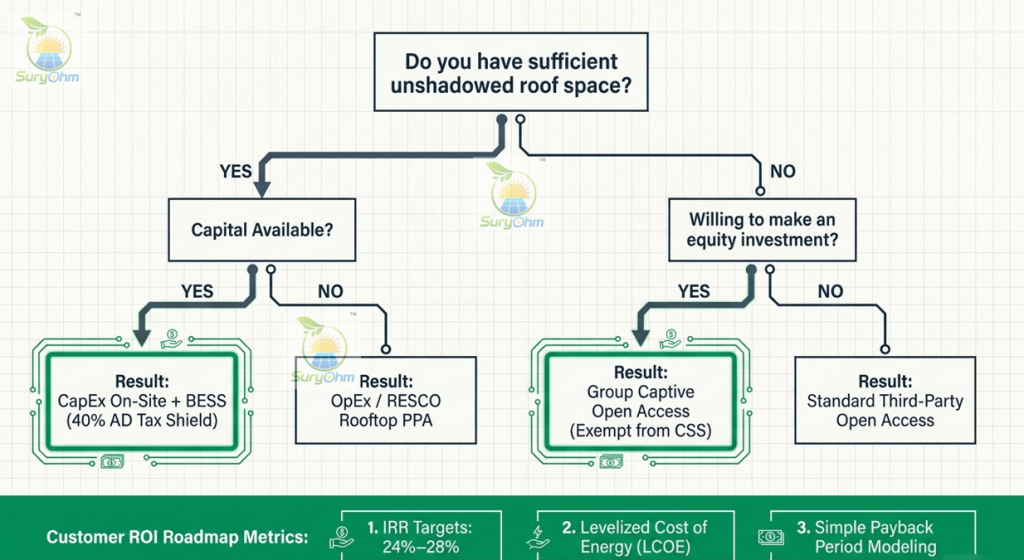
How does one decide on different Options?
Chat to our expertise to solve your Energy Problem